
Management Strategies
Effective management of cognitive disorders, including Alzheimer’s disease and other dementias, requires a comprehensive, person-centered approach. Whether addressing mild cognitive impairment (MCI) or more advanced dementia, treatment strategies should combine non-pharmacologic interventions, pharmacologic options, along with ongoing support for patients and caregivers.
Non-Pharmacologic Strategies1
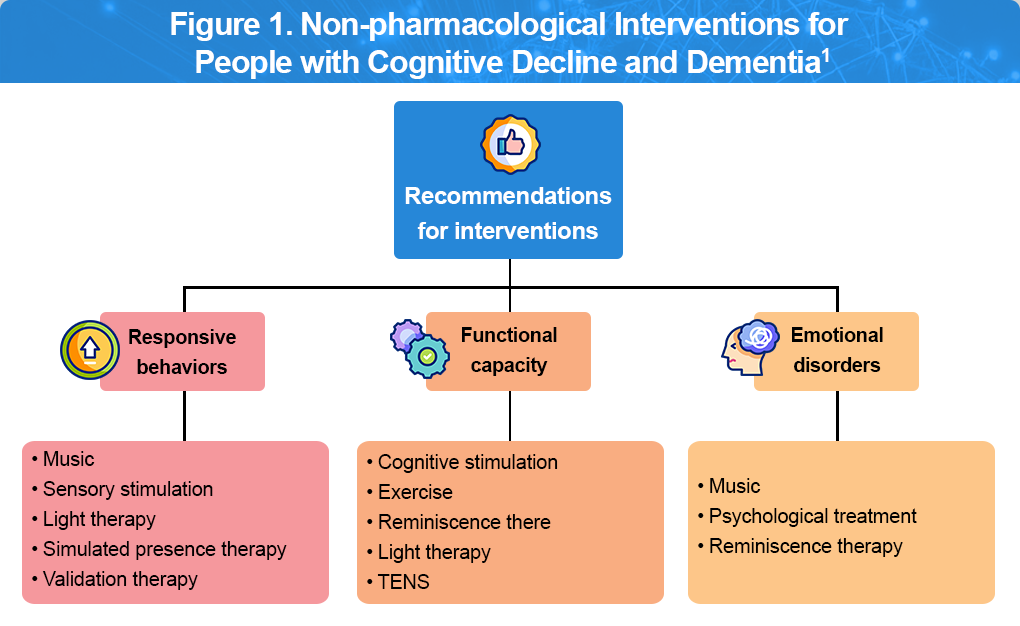
Non-pharmacologic interventions are widely regarded as safe and typically associated with fewer side effects. These approaches come from a range of disciplines, all aiming to enhance cognition, mood, and the behavioral and psychological symptoms of cognitive decline and dementia. A comprehensive review of the literature has shown that such interventions can be effective in managing responsive behavior, supporting or preserving functional abilities, and reducing emotional disturbances. The strongest evidence for reducing responsive behavior was found for music therapy, sensory stimulation, simulated presence, and validation therapy. Exercise and light therapy were most effective in improving or maintaining activities of daily living, while cognitive stimulation and reminiscence therapy showed benefits for cognitive function. In addressing emotional disorders, the most effective approaches included music therapy, psychological interventions, and reminiscence. Given their demonstrated benefits, these non-pharmacologic strategies may play an essential role across all stages of cognitive decline (see Figure 1).
Pharmacologic Strategies2
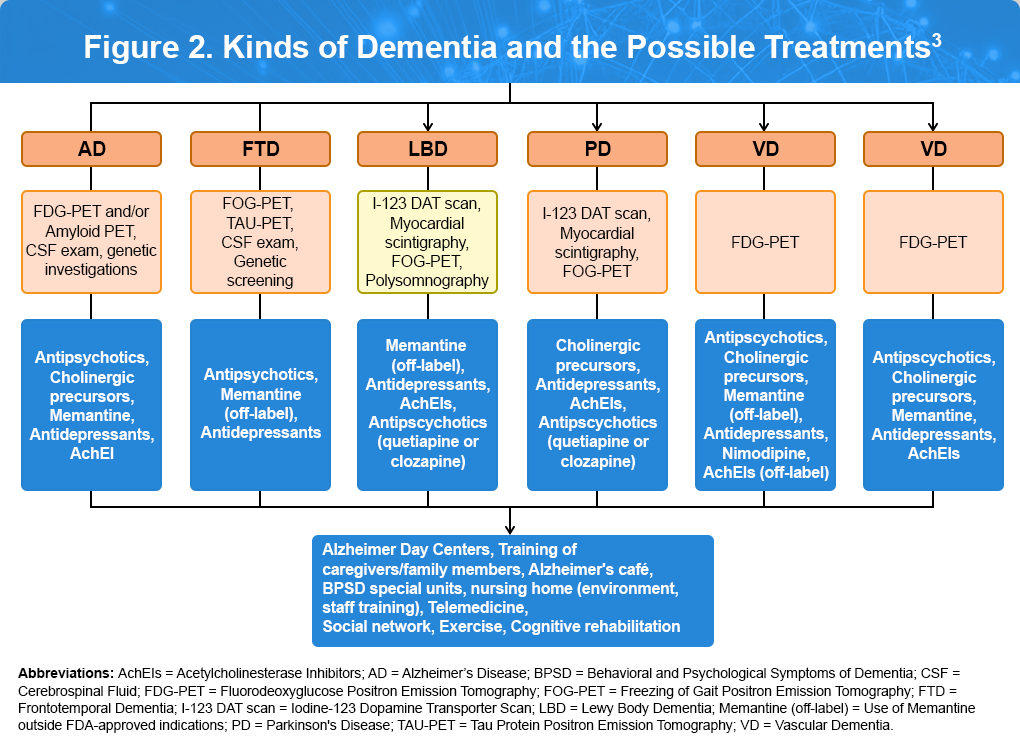
There is currently no pharmacological treatment for cognitive decline. Management strategies focus on maintaining functional independence and addressing the behavioral and psychological symptoms often associated with dementia. The treatment of behavioral and mood disorders requires the right dosage/benefit ratio between non-pharmacological and pharmacological therapies. Counseling plays a crucial role in the overall care of individuals with cognitive decline. These individuals may be at increased risk for mobility issues and recurrent falls. Therefore, it is important to identify and correct contributing factors, such as visual or hearing impairments. For those with sleep apnea, continuous positive airway pressure therapy may offer benefits. While depression is common in this population, there is no conclusive evidence that treating depression improves cognitive function. Antidepressants with strong anticholinergic effects should be avoided, as the use of these medications has been shown to negatively affect cognition in older adults. Nevertheless, antidepressants and antipsychotics are still important for treating some typical characters of dementia, such as depression, agitation, sleep disorders, anxiety, and sundowning.
Developing an algorithm can assist healthcare professionals for managing patients with MCI and dementia by helping to navigate overly complex clinical scenarios, particularly when patients are elderly, frail, and undergoing multiple treatments. Figure 2 provides treatment options for patients once a diagnosis is confirmed.
For additional information on treating and managing Alzheimer’s disease, refer to: https://detectalz.com/clinical-toolkit/treating-and-managing-alzheimers/
Monitoring and Follow-Up
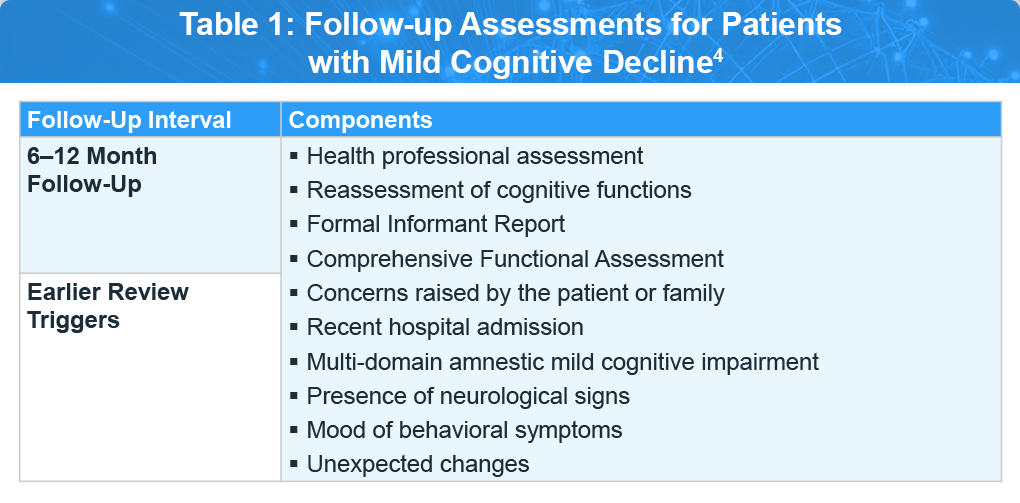
Regular follow-up is essential for tracking disease progression, managing medications, and adjusting care plans as needs evolve (see Table 1).
Summary
Management of cognitive decline is multifaceted, combining evidence-based medications with lifestyle, behavioral, and psychosocial interventions. With emerging disease-modifying therapies and greater access to diagnostic tools, early intervention and personalized care have never been more important. Engaging patients, families, and healthcare teams in ongoing management can meaningfully improve outcomes and quality of life.
References
- Meyer C, O’Keefe F. Non‑pharmacological interventions for people with dementia: a review of reviews. Dementia (London). 2018;19:1927‑1954.
- Dhakal A, Bobrin BD. Cognitive Deficits. StatPearls Last Updated Feb 14, 2023. In: StatPearls [Internet]. Treasure Island (FL): StatPearls Publishing; 2025. Available from: https://www.ncbi.nlm.nih.gov/books/NBK559052/
- Gareri P, Cotroneo AM, Gelmini G, Mossello E, Massaia M; Touch Working Group. An algorithm for the early diagnosis and correct approach to dementia management: results of a multiprofessional team. Aging Clin Exp Res. 2024;36:102.
- Subramanyam AA, Singh S, Raut NB. Clinical practice guidelines for assessment and management of mild neurocognitive disorder. Indian J Psychiatry. 2025 Jan;67:21-40. Indian J Psychiatry. 2025;67:280.
Accessed on September 22, 2025.